Father Son Duo of Cecil Fielder and Prince Fielder have the same number of home runs in their career - 319

Мне нравится
Комментарий
Перепост
Father Son Duo of Cecil Fielder and Prince Fielder have the same number of home runs in their career - 319





Is that real?

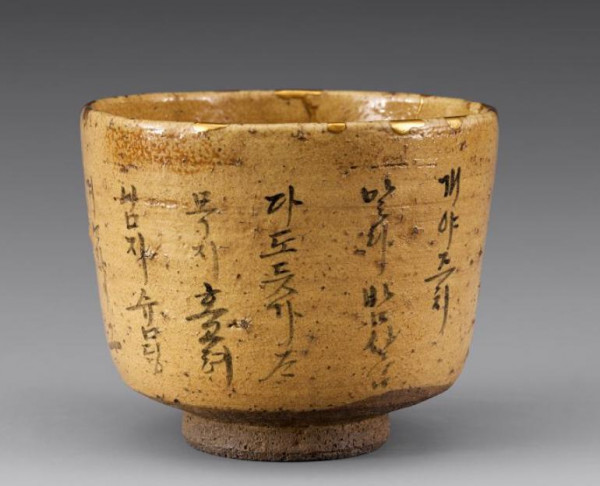
Tea bowl inscribed with Korean poem, Japanese, 17th–18th century Stoneware (Hagi); gold lacquer repairs [770x624]
Gift of the Family of Fujii Takaaki, National Museum of Korea
This “HAGI “ tea bowl was made in the early seventeenth century at the Hagi kilns in Yamaguchi Prefecture, located at the southern end of Honshu.
The Hagi kilns were built by two skilled Korean potters, brothers Lee Jakgwang and Lee Gyeong, who were forcibly moved to Japan during the Imjin War (1592-1598), when Korea was invaded by the warlord Toyotomi Hideyoshi. Under Hideyoshi’s rule, thousands of Korean potters, farmers, and craftspeople were seized, traded, and forced into labor.
The tea bowl’s story becomes even more intriguing when we read its inscribed poem.
"개야 짖지 마ë¼. ë°¤ ì‚¬ëžŒì´ ëª¨ë‘ ë„ë‘‘ì¸ê°€.
ìžëª©ì§€ í˜¸ê³ ë ¤ ë‹˜ì´ ê³„ì‹ ê³³ì— ë‹¤ë…€ì˜¬ 것ì´ë‹¤.
ê·¸ ê°œë„ í˜¸ê³ ë ¤ì˜ ê°œë¡œë‹¤. ë“£ê³ ìž ìž í•˜êµ¬ë‚˜"
(\*í˜¸ê³ ë ¤ = í¬ë¡œê°€ ëœ ì¡°ì„ ì¸)
# Dog, stop barking.
# Are people wandering around at night all thieves?
# I shall pay a visit to where Ho-KoryÅ is (or Ho-KoryÅ will pay a visit).
# This dog must be a Korean (Ho-KoryÅ) dog, too.
# He has heard and fell silent.
This poem is written in the Korean short verse form known as sijo.
KoryÅ, the name of a dynasty that ruled on the Korean peninsula from the tenth to the fourteenth centuries, was a synonym for Korea in Japan.
And it is possible that “ho†is intended to mean “little†— in other words, it may mean the voice of the poem is going to visit “Little Koreaâ€, a settlement of Koreans in Japan,
The Hagi corpus was comprised of elite items such as tea wares for the MÅri family, and Hagi potters are known to have produced replicas of classic Korean tea bowls.
This particular bowl was fired with a yellowish glaze to approximate the warm golden color of Korean Ido tea bowls, which was traditionally likened to the colour of a loquat.
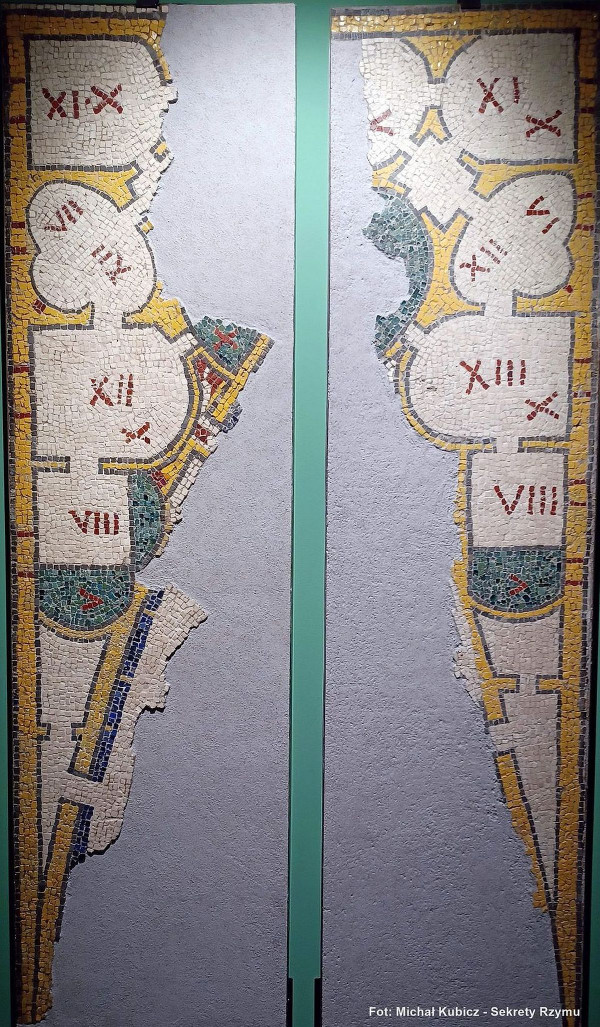
An unusual Roman mosaic showing the plan of the building (or rather its fragments in two pieces), probably public or private baths. The mosaic probably dates from the middle of the 3rd century CE. [1200x2054]